Futura News

Home > News
Fertility

Can I Become a Mom If I Only Have One Ovary?

Finding out that you only have one ovary—whether due to a previous surgery, a medical condition, or a congenital situation—can bring up many emotions at once. For many women, this news comes with fear, uncertainty, and a deeply personal question:Can I still have a baby? At Ingenes, this is one of the most common questions we hear during consultations. And in many cases, the answer is yes. Having only one ovary does not mean that the path to motherhood is closed. It means that this path needs to be understood, properly evaluated, and supported in the right way. In this article, we explain clearly and honestly what it means to live with one ovary, how it may affect fertility, and how, at Ingenes, we can help you pursue your dream of having a baby. What Role Do the Ovaries Play in Fertility? The ovaries play a central role in female reproductive health. They are responsible for producing eggs and secreting essential hormones such as estrogen and progesterone, which regulate the menstrual cycle, ovulation, and the preparation of the uterus for pregnancy. Under normal conditions, women have two ovaries, and each month one of them releases an egg. However, the human body has a remarkable ability to adapt. When one ovary is absent, the remaining ovary can take over both functions: ovulation and hormonal balance. For this reason, from a medical perspective, having only one ovary does not automatically mean infertility. Why Might a Woman Have Only One Ovary? There are several reasons why a woman may live with only one ovary, and many of them are related to overall health rather than fertility itself. Some women have undergone gynecological surgeries due to ovarian cysts, endometriosis, ovarian torsion, or benign tumors. In other cases, the loss of an ovary occurs after an ectopic pregnancy or complications that required surgical intervention. There are also congenital situations in which a woman is born with only one ovary and may not discover it until she begins trying to conceive or undergoes testing for another reason. Regardless of the cause, the most important factor is not what is missing, but how well the remaining ovary is functioning. Does Having One Ovary Reduce the Chances of Pregnancy? Not automatically. Many women with one ovary ovulate normally, have regular menstrual cycles, and achieve spontaneous pregnancies. In fact, some women only discover they have one ovary after already becoming mothers. What truly influences the chances of achieving pregnancy is not the number of ovaries, but factors such as: That is why, rather than assuming limitations, it is essential to properly evaluate fertility. How Is Fertility Evaluated When There Is Only One Ovary? At Ingenes, the first step is always a comprehensive evaluation. This allows us to understand how the ovary is functioning, assess ovarian reserve, and determine realistic possibilities for each individual case. Different aspects of reproductive health are analyzed, including hormonal studies, ovarian reserve assessments, and specialized ultrasounds that allow us to observe the activity of the remaining ovary. All this information is evaluated together, never in isolation. This evaluation is essential because it avoids assumptions and makes it possible to design a plan based on real data. Is It Possible to Try for a Natural Pregnancy With One Ovary? Yes, in many cases it is. If the remaining ovary ovulates regularly and there are no other fertility-related factors, natural pregnancy can occur. However, when pregnancy does not happen within a reasonable amount of time—especially for women over 35—it is important not to wait indefinitely. Seeking help at the right time does not mean giving up. It means protecting time and expanding possibilities. Options for Pursuing Pregnancy With One Ovary When medical support is needed, the approach must always be personalized. At Ingenes, each case is analyzed individually, taking into account age, ovarian reserve, and medical history. In some situations, the natural cycle can be supported or ovulation stimulated to optimize the chances of pregnancy. In other cases, In Vitro Fertilization (IVF) becomes an important tool, as it allows specialists to work directly with eggs obtained from the functional ovary, without relying on the fallopian tubes. IVF can be especially helpful when time is a critical factor, when ovarian reserve is low, or when additional diagnoses are present. Does Having One Ovary Affect Egg Quality? Not simply because there is only one ovary. Egg quality is primarily related to age and individual biological factors, not to the number of ovaries. A healthy ovary can produce good-quality eggs for many years. For this reason, the correct approach is not to focus on limitations, but rather on how to make the most of the reproductive potential that exists today. The Emotional Impact of This Diagnosis Beyond the medical aspects, living with one ovary can carry a significant emotional burden. Many women experience fear, anxiety, or constant pressure related to the passage of time. At Ingenes, we understand that fertility is not only a clinical process. It is a deeply human experience. That is why emotional support is part of the journey from the very first contact. Feeling heard, understood, and supported is also part of moving forward. Why Is It Important Not to Delay an Evaluation? One of the most common mistakes is assuming that “it will happen eventually” without having clear information. In fertility, time truly matters. An early evaluation does not force you to start treatment, but it does allow you to understand your current situation and make informed decisions. Waiting without information can close options that are available today How Can Ingenes Help You? At Ingenes, we have more than 20 years of experience supporting women with a wide range of diagnoses, including complex fertility scenarios. Our approach is based on comprehensive evaluation from the first consultation, personalized plans, and close, human-centered support. This is not about empty promises, but about building a realistic path toward the goal of having a baby. Your Next Step Can Make the Difference Having one ovary does not define

Read More »
Ingenes

Biologist Day: The Science That Makes the Dream of Having a Baby Possible

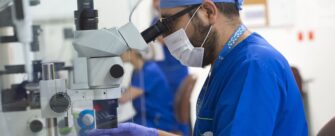
Every advance in assisted reproduction, every accurate diagnosis, and every treatment that offers a real possibility of having a baby has one thing in common: science. And at the center of that science are biologists—professionals whose work is essential to understanding life, protecting it, and supporting it from its very earliest stages. In Mexico, Biologist Day is observed every January 25, a date dedicated to recognizing those who devote their knowledge and vocation to studying life in all its forms. In the field of reproductive health, their work is essential: thanks to biology, we now have more precise diagnoses, more advanced laboratories, and treatments that open real paths for those who want to have a baby. Beyond science, the work of biologists is also deeply human, because it directly impacts the lives of thousands of people who are trying to build a family. At Ingenes, biology is a key part of our care model: from the laboratory to clinical support, their work helps create personalized and safe solutions that bring you closer to your ultimate goal—bringing a baby home. What does a biologist do in the field of reproductive health? Biology is a broad science that studies life in all its forms. In the field of assisted reproduction, specialized biologists work directly with the cellular, genetic, and reproductive processes involved in conception and embryonic development. Their work includes: In treatments such as in vitro fertilization, artificial insemination, or fertility preservation, biologists actively participate in every stage, providing scientific knowledge that allows for informed and safe decision-making. Biology as the foundation of assisted reproduction Human reproduction is a complex biological process that depends on multiple factors: egg quality, sperm health, embryonic development, implantation, and pregnancy progression. Understanding these processes requires solid training in cellular, molecular, and genetic biology. At Ingenes, the biological approach makes it possible to: Thanks to this knowledge, it is possible to offer more precise treatments tailored to each reproductive history. The biologist’s work inside the fertility laboratory The assisted reproduction laboratory is one of the spaces where biology literally comes to life. In this highly controlled environment, biologists work with reproductive cells and embryos, caring for every detail to preserve their viability. Control and analysis of biological processes Each laboratory procedure requires constant supervision. Biologists are responsible for ensuring that physical and chemical conditions are optimal for cellular development. Temperature, pH, gases, and culture media are carefully monitored. This control is essential, as even small variations can influence embryonic development and the chances of achieving a successful pregnancy. Cellular and embryonic evaluation Analyzing cellular behavior is one of the biologist’s most specialized tasks. Observing how an embryo divides, how it responds to its environment, and how it evolves over several days allows for the identification of those with the highest potential. These evaluations are not based solely on visual criteria but on scientific knowledge and accumulated experience, making the biologist a key figure within the multidisciplinary team. Biology and genetics: an alliance to understand fertility Genetics is a fundamental branch of biology that has transformed the way fertility is addressed. Thanks to the work of specialized biologists, it is now possible to analyze embryos’ genetic information before transfer, reducing risks and improving success rates. At Ingenes, genetic studies are part of a comprehensive approach aimed at: Biological knowledge applied to genetics allows for greater clarity for patients who have experienced complex diagnoses or multiple unsuccessful attempts. The biologist’s role in complex fertility cases Not all reproductive stories are the same. There are cases in which factors such as age, low ovarian reserve, medical conditions, or reproductive history require a deeper approach. In these scenarios, the biologist’s work becomes even more relevant. Their analysis helps determine what is happening at a cellular level and design strategies that maximize possibilities within what is scientifically achievable. This approach is especially valuable for individuals seeking answers after years of unsuccessful attempts, seemingly normal test results, or unclear diagnoses. Science with ethics and responsibility Working with reproductive cells and embryos involves a great ethical responsibility. Biologists are trained not only in science but also in ethical principles that guide every decision. At Ingenes, biology applied to reproduction follows clear protocols, respect for each process, and a deep commitment to life. Every procedure is carried out with the goal of protecting both the biological and emotional integrity of those who place their trust in the institute. Teamwork: biology in service of the patient Biologists do not work in isolation. Their role integrates with physicians, nurses, geneticists, and other specialists to build a comprehensive care model. This collaboration allows teams to: At Ingenes, this teamwork is one of the pillars that enables the institute to offer real solutions for having a baby, even in complex cases. Recognizing those who make the invisible possible Many times, the biologist’s work takes place far from the consultation room and without direct patient contact. However, its impact is present in every outcome, every embryo that progresses, and every pregnancy that moves forward. Biologist Day is an opportunity to make this silent yet indispensable work visible. Recognizing their contribution means recognizing that fertility is built through science, precision, and human commitment. Biology that turns possibilities into reality Celebrating Biologist Day is celebrating the science that makes life possible. At Ingenes, biology is a fundamental tool for understanding fertility, supporting complex stories, and opening real paths toward the dream of having a baby. Behind every treatment there is knowledge, analysis, and scientific decision-making that truly makes a difference. And behind that work, there are biologists committed to transforming possibilities into realities. Because when science is practiced with responsibility and humanity, its impact goes far beyond the laboratory—it reaches the lives of thousands of families.

Read More »